Japanese Food Names offer a wonderful look at Japan’s food culture, where fresh ingredients, seasonal flavors, careful preparation, and beautiful presentation come together. From comforting bowls of ramen to delicate sushi, savory rice dishes, crispy snacks, and traditional sweets, Japanese cuisine has something for every taste.
These names are also useful for food blogs, restaurant menus, cooking projects, character ideas, and anyone interested in Japanese language and culture.
In this guide, you will find Japanese Food Names organized into clear categories, with Japanese writing, meanings, and descriptions to explain what each dish is and why it is special.
The Japanese names are provided in their commonly used forms, including kanji where appropriate. Some food names are normally written in hiragana or katakana, so those scripts are included when they are more natural than kanji.
Understanding Japanese Food Names and Their Meanings

Japanese Food Names offer a glimpse into Japan’s rich food culture, traditional cooking methods, and regional specialties. From sushi and ramen to mochi, tempura, and matcha, each name reflects a different ingredient, preparation style, or culinary tradition.
Learning these names can help readers understand Japanese menus, recognize familiar dishes, and appreciate the language behind popular foods.
Whether you are looking for ideas for a food blog, restaurant menu, cooking project, or simply want to learn more about Japanese cuisine, these names provide a useful starting point.
Popular Japanese Food Names
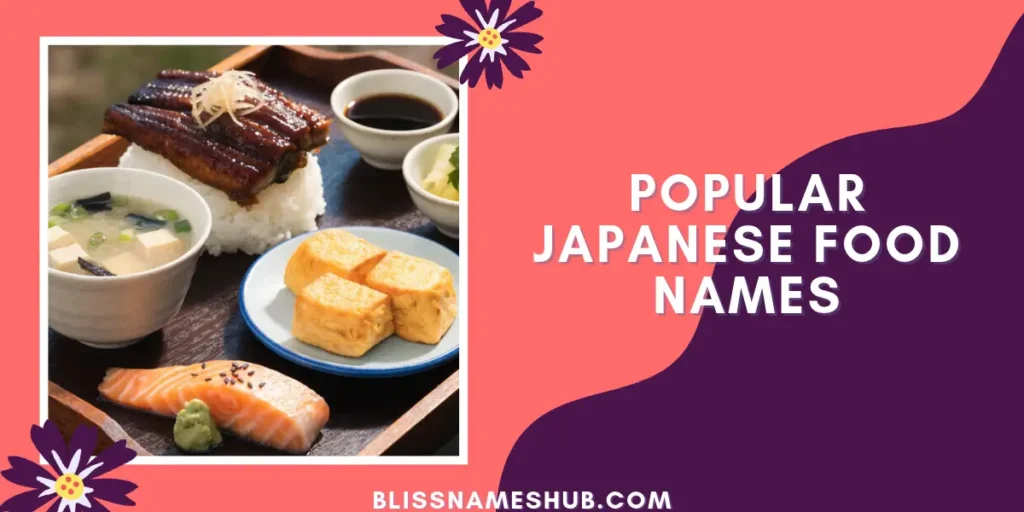
Japanese cuisine includes many internationally loved dishes, from rice-based meals to noodles and bite-sized snacks.
These popular Japanese Food Names are a useful starting point for beginners who want to recognize familiar dishes and understand their Japanese names.
| Name | Kanji / Japanese Name | Meaning | Description |
| Sushi | 寿司 | Seasoned rice with toppings | A famous Japanese dish combining vinegared rice with fish, seafood, vegetables, or egg. |
| Ramen | ラーメン | Wheat noodle soup | A comforting noodle dish served in a rich broth with toppings such as meat, eggs, and vegetables. |
| Tempura | 天ぷら | Lightly battered fried food | Seafood and vegetables are coated in a delicate batter and fried until crisp. |
| Onigiri | おにぎり | Rice ball | Hand-shaped rice often filled with salmon, pickled plum, or tuna and wrapped in seaweed. |
| Udon | うどん | Thick wheat noodles | Soft, chewy noodles commonly served in a warm broth or with a dipping sauce. |
| Soba | そば | Buckwheat noodles | Thin noodles with a nutty flavor, enjoyed hot in soup or cold with dipping sauce. |
| Takoyaki | たこ焼き | Octopus balls | Round savory batter balls filled with octopus and topped with sauce and bonito flakes. |
| Okonomiyaki | お好み焼き | Savory mixed pancake | A hearty pancake prepared with cabbage, batter, and optional meat or seafood. |
| Yakitori | 焼き鳥 | Grilled chicken | Skewered chicken grilled over heat and seasoned with salt or a sweet-savory sauce. |
| Gyoza | 餃子 | Dumplings | Thin wrappers filled with meat and vegetables, usually pan-fried until golden underneath. |
| Donburi | 丼 | Rice bowl | A meal served over rice with toppings such as beef, chicken, egg, or seafood. |
| Katsudon | カツ丼 | Cutlet rice bowl | A bowl of rice topped with breaded pork cutlet, egg, and a savory sauce. |
| Gyudon | 牛丼 | Beef rice bowl | Thinly sliced beef and onions simmered in a sweet soy-based sauce and served over rice. |
| Oyakodon | 親子丼 | Parent-and-child rice bowl | Chicken and egg gently cooked together in seasoned broth and served over rice. |
| Unadon | 鰻丼 | Eel rice bowl | Grilled freshwater eel glazed with a sweet sauce and placed over steamed rice. |
| Curry Rice | カレーライス | Japanese curry with rice | A mild, thick curry served with rice, often accompanied by potatoes, carrots, and meat. |
| Tonkatsu | 豚カツ | Breaded pork cutlet | Pork coated in breadcrumbs and fried until crisp, typically served with cabbage and sauce. |
| Karaage | 唐揚げ | Japanese-style fried food | Bite-sized pieces of marinated chicken fried until crunchy outside and juicy inside. |
| Shabu-Shabu | しゃぶしゃぶ | Thin-sliced hot-pot dish | Thin meat slices and vegetables are briefly cooked in simmering broth at the table. |
| Sukiyaki | すき焼き | Sweet-savory hot pot | Beef, vegetables, tofu, and noodles simmer together in a seasoned broth. |
| Miso Soup | 味噌汁 | Fermented soybean soup | A staple soup made with miso paste and dashi, often containing tofu and seaweed. |
| Chawanmushi | 茶碗蒸し | Steamed egg custard | A silky savory custard gently steamed with ingredients such as mushrooms, shrimp, or chicken. |
| Tamagoyaki | 卵焼き | Rolled omelet | Layers of seasoned egg are cooked into a soft roll, often served at breakfast or in sushi. |
| Yakisoba | 焼きそば | Fried noodles | Wheat noodles stir-fried with vegetables, meat, and a tangy, savory sauce. |
| Yaki Onigiri | 焼きおにぎり | Grilled rice ball | Rice balls grilled until crisp outside, often brushed with soy sauce for extra flavor. |
| Korokke | コロッケ | Japanese croquette | Mashed potato or other fillings coated in breadcrumbs and fried until golden. |
| Nikuman | 肉まん | Steamed meat bun | A fluffy steamed bun filled with seasoned minced meat and vegetables. |
| Melonpan | メロンパン | Sweet crusted bread | Soft bread topped with a crisp cookie-like layer; its name refers to its appearance. |
| Kare Pan | カレーパン | Curry bread | Bread filled with Japanese curry and usually coated in breadcrumbs before frying. |
| Omurice | オムライス | Omelet rice | Seasoned fried rice wrapped in a thin omelet and often finished with ketchup. |
| Hayashi Rice | ハヤシライス | Rice with rich beef sauce | Rice served with a thick, savory sauce made with beef, onions, and tomatoes. |
| Chāhan | 炒飯 | Fried rice | Rice stir-fried with egg, vegetables, and meat or seafood for a quick, satisfying meal. |
| Edamame | 枝豆 | Young soybeans | Green soybeans boiled or steamed and lightly salted for a simple snack or appetizer. |
| Tsukemono | 漬物 | Japanese pickles | Vegetables preserved with salt, vinegar, rice bran, or miso and served alongside meals. |
| Natto | 納豆 | Fermented soybeans | Sticky, strongly flavored soybeans commonly eaten with rice at breakfast. |
| Hiyayakko | 冷奴 | Chilled tofu | Cool silken or firm tofu served with toppings such as ginger, scallions, and soy sauce. |
| Agedashi Tofu | 揚げ出し豆腐 | Lightly fried tofu | Tofu coated lightly, fried, and served in a warm savory dashi-based sauce. |
| Yakisakana | 焼き魚 | Grilled fish | Fish grilled and seasoned simply, often served with rice, soup, and pickles. |
| Sashimi | 刺身 | Sliced raw seafood | Carefully cut fresh fish or seafood served with soy sauce, wasabi, and garnishes. |
| Kaisendon | 海鮮丼 | Seafood rice bowl | A bowl of rice topped with assorted fresh seafood, often including tuna and salmon. |
| Temaki | 手巻き寿司 | Hand-rolled sushi | A cone-shaped seaweed wrap filled with rice, seafood, and vegetables. |
| Inari Sushi | いなり寿司 | Seasoned rice in tofu pouch | Sushi rice tucked inside sweet-savory fried tofu pockets. |
| Nigiri Sushi | 握り寿司 | Hand-pressed sushi | Small portions of vinegared rice topped with fish, seafood, or other ingredients. |
| Maki Sushi | 巻き寿司 | Rolled sushi | Rice and fillings wrapped in seaweed and sliced into neat bite-sized rounds. |
| Chazuke | 茶漬け | Tea or broth over rice | A simple rice dish topped with ingredients such as salmon and finished with tea or broth. |
| Ochazuke | お茶漬け | Rice soaked in tea | A light, comforting bowl made by pouring green tea or dashi over rice and toppings. |
| Zaru Soba | ざるそば | Chilled buckwheat noodles | Cold soba served on a bamboo tray with a separate dipping sauce. |
| Kitsune Udon | きつねうどん | Udon with fried tofu | Thick noodles in broth topped with a sweet, seasoned piece of fried tofu. |
| Tempura Udon | 天ぷらうどん | Udon with tempura | A bowl of udon served with crispy battered vegetables or seafood. |
| Mentaiko Pasta | 明太子パスタ | Spicy cod-roe pasta | A Japanese-style pasta dish flavored with salted spicy cod roe and often butter or cream. |
Traditional Japanese Food Names
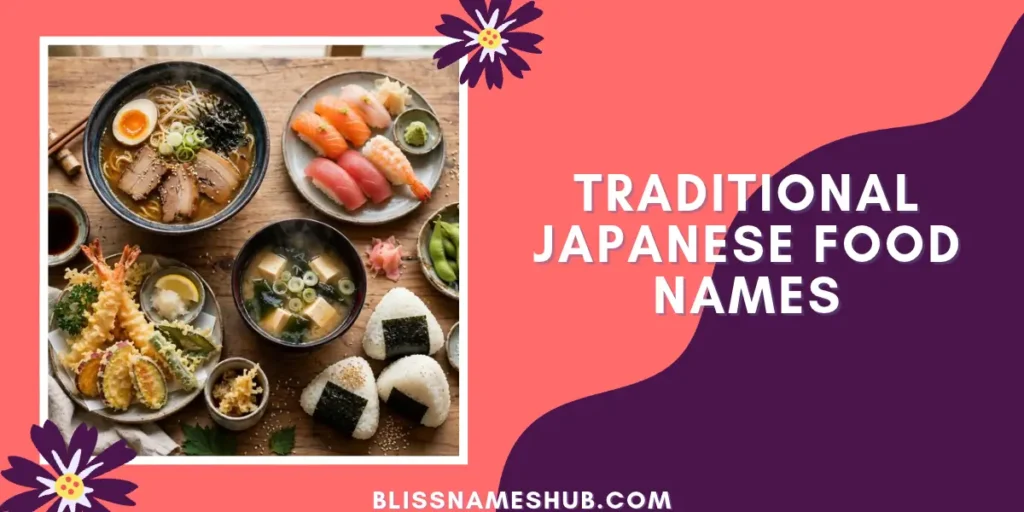
Traditional Japanese dishes reflect home cooking, seasonal ingredients, regional customs, and long-established preparation methods. These Japanese Food Names are especially helpful for readers interested in cultural traditions and the foods served during family gatherings and special occasions.
| Name | Kanji / Japanese Name | Meaning | Description |
| Washoku | 和食 | Traditional Japanese cuisine | A broad term for Japanese food traditions that emphasize seasonal produce, rice, soup, and balanced side dishes. |
| Ichiju Sansai | 一汁三菜 | One soup and three sides | A traditional meal structure combining soup, a main dish, and two additional side dishes with rice. |
| Kaiseki | 懐石料理 | Refined multi-course meal | A carefully arranged sequence of small dishes that highlights seasonality, presentation, and ingredient quality. |
| Osechi Ryori | おせち料理 | New Year foods | Special dishes prepared for Japanese New Year, often arranged in decorative boxes with symbolic meanings. |
| Ozoni | お雑煮 | New Year mochi soup | A celebratory soup containing rice cakes, with ingredients and broth varying by region. |
| Sekihan | 赤飯 | Red bean rice | Sticky rice cooked with red azuki beans, traditionally served during celebrations and milestones. |
| Takikomi Gohan | 炊き込みご飯 | Rice cooked with ingredients | Rice simmered with vegetables, mushrooms, meat, or seafood so the grains absorb the seasoning. |
| Kamameshi | 釜飯 | Pot-cooked rice | Rice cooked in an individual metal pot with broth, vegetables, and toppings. |
| Okayu | お粥 | Rice porridge | Soft rice simmered with plenty of water, often eaten as a gentle breakfast or recovery meal. |
| Kayu | 粥 | Porridge | A general term for a soft, moist porridge made from grains, especially rice. |
| Zosui | 雑炊 | Savory rice soup | Rice cooked in seasoned broth, frequently with egg and vegetables, sometimes using leftover hot-pot broth. |
| Imoni | 芋煮 | Taro and meat stew | A regional stew made with taro, vegetables, and meat, especially associated with autumn gatherings. |
| Butajiru | 豚汁 | Pork and miso soup | A hearty miso soup with pork and root vegetables, offering a fuller meal than ordinary miso soup. |
| Kenchin Jiru | けんちん汁 | Vegetable tofu soup | A nourishing soup of root vegetables and tofu, often prepared with sesame oil and dashi. |
| Dobin Mushi | 土瓶蒸し | Teapot-steamed soup | A delicate broth steamed in a small ceramic pot with mushrooms, seafood, and citrus. |
| Yudofu | 湯豆腐 | Simmered tofu | Tofu gently warmed in hot water or light broth and served with dipping sauces. |
| Dengaku | 田楽 | Miso-glazed food | Tofu, eggplant, or other ingredients grilled and coated with a savory-sweet miso topping. |
| Nasu Dengaku | 茄子田楽 | Miso-glazed eggplant | Eggplant grilled or roasted until tender and finished with a rich miso glaze. |
| Chikuzenni | 筑前煮 | Simmered chicken and vegetables | A home-style dish of chicken and root vegetables slowly cooked in a lightly sweet soy-based broth. |
| Nikujaga | 肉じゃが | Meat and potato stew | A comforting stew of thinly sliced meat, potatoes, onions, and carrots in seasoned broth. |
| Kabocha Nimono | かぼちゃの煮物 | Simmered pumpkin | Pumpkin cooked until tender in a lightly sweet soy and dashi seasoning. |
| Hijiki Nimono | ひじきの煮物 | Simmered hijiki seaweed | A side dish of seaweed simmered with carrots, soybeans, or fried tofu. |
| Kiriboshi Daikon | 切り干し大根 | Dried radish dish | Rehydrated strips of daikon simmered with vegetables and seasonings for a mildly sweet side. |
| Kinpira Gobo | きんぴらごぼう | Braised burdock root | Thin strips of burdock root and carrot stir-fried with soy sauce, sugar, and sometimes chili. |
| Gomaae | ごま和え | Sesame-dressed vegetables | Blanched vegetables tossed in a nutty sesame dressing, often served as a small side. |
| Ohitashi | おひたし | Seasoned blanched greens | Vegetables are briefly boiled, cooled, and dressed with dashi or soy-based seasoning. |
| Sunomono | 酢の物 | Vinegar-dressed food | A refreshing side dish featuring cucumber, seaweed, or seafood in a light vinegar dressing. |
| Namasu | 紅白なます | Vinegar-marinated vegetables | Thin strips of daikon and carrot dressed in vinegar, commonly served during New Year celebrations. |
| Shiraae | 白和え | Tofu-dressed vegetables | Vegetables mixed with a creamy tofu dressing, sometimes seasoned with sesame and miso. |
| Gomoku Gohan | 五目ご飯 | Rice with five ingredients | Mixed rice prepared with several ingredients, such as mushrooms, carrots, chicken, and tofu. |
| Mame Gohan | 豆ご飯 | Pea rice | Rice cooked with green peas, creating a simple seasonal dish with a fresh flavor. |
| Tai Meshi | 鯛めし | Sea bream rice | Rice cooked with or served alongside sea bream, often prepared for festive meals. |
| Unagi Kabayaki | うなぎの蒲焼き | Glazed grilled eel | Eel grilled and brushed repeatedly with a sweet soy-based sauce until glossy and tender. |
| Shioyaki | 塩焼き | Salt-grilled food | Fish or other ingredients seasoned with salt and grilled to bring out their natural flavor. |
| Teriyaki | 照り焼き | Glossy grilled preparation | Fish, chicken, or meat cooked with a sweet-savory glaze made from soy sauce and other seasonings. |
| Misoyaki | 味噌焼き | Miso-grilled food | Ingredients are coated or marinated in miso before grilling for a rich, savory finish. |
| Saikyo Yaki | 西京焼き | Kyoto-style miso-grilled fish | Fish is marinated in sweet white miso and cooked until aromatic and tender. |
| Kasuzuke | 粕漬け | Sake-lees marinade | Fish or vegetables are preserved or marinated in the lees left from sake production. |
| Nukazuke | 糠漬け | Rice-bran pickles | Vegetables fermented in a rice-bran bed develop a distinctive tangy flavor and crisp texture. |
| Umeboshi | 梅干し | Pickled plum | A salty, sour pickled fruit commonly served with rice or tucked into rice balls. |
| Takuan | 沢庵 | Pickled daikon | Yellow pickled radish served in slices as a crunchy accompaniment to rice-based meals. |
| Shiozake | 塩鮭 | Salted salmon | Salmon cured with salt and commonly grilled for a traditional Japanese breakfast. |
| Nitsuke | 煮付け | Simmered fish or food | Fish simmered in a seasoned liquid containing soy sauce, mirin, sugar, and sometimes ginger. |
| Oden | おでん | Simmered assorted ingredients | Daikon, eggs, tofu, fish cakes, and other ingredients simmer slowly in a light broth. |
| Chawanmushi | 茶碗蒸し | Steamed egg custard | A tender egg dish traditionally served in a small cup, with delicate fillings and a gentle broth flavor. |
| Hōtō | ほうとう | Flat noodles in miso soup | A regional noodle dish from Yamanashi featuring broad noodles and vegetables in a hearty miso broth. |
| Jibuni | 治部煮 | Kanazawa-style simmered dish | A regional stew traditionally made with duck or other meat, vegetables, and a thickened broth. |
| Hittsumi | ひっつみ | Hand-torn dough soup | A northern Japanese comfort food featuring pieces of hand-torn dough cooked with vegetables in broth. |
| Harako Meshi | はらこ飯 | Salmon and salmon-roe rice | A regional rice dish topped with cooked salmon and glistening salmon roe. |
| Fugu Nabe | ふぐ鍋 | Pufferfish hot pot | A specialty hot pot made with pufferfish; it must be prepared by appropriately licensed professionals. |
| Imagawa Yaki | 今川焼き | Filled round cake | A round griddled cake commonly filled with sweet red bean paste, with names varying across Japan. |
| Hoshi Imo | 干し芋 | Dried sweet potato | Sweet potato slices dried to create a chewy snack with concentrated natural sweetness. |
| Yokan | 羊羹 | Sweet bean jelly | A firm confection made from sweet bean paste and agar, commonly sliced into small pieces. |
Japanese Noodle and Soup Names
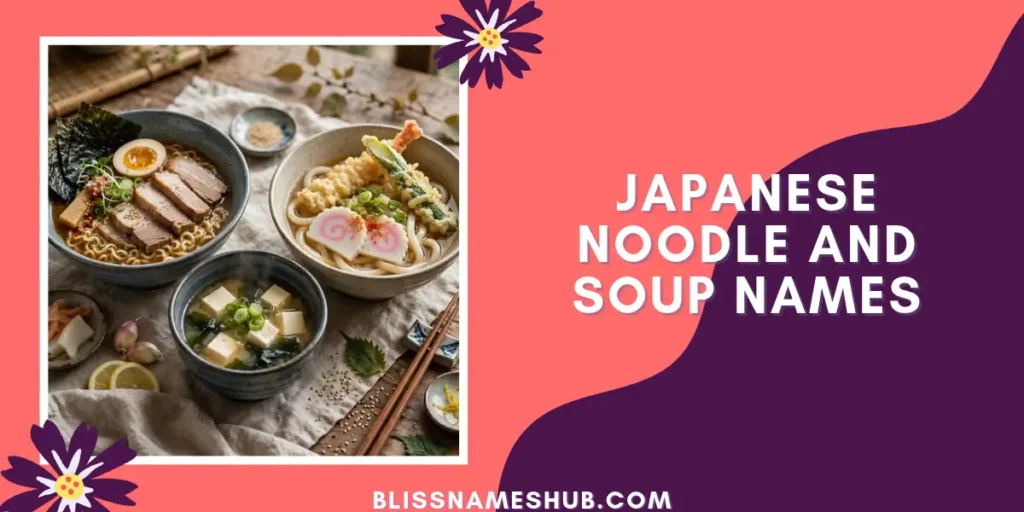
Japanese noodles and soups range from light, refreshing dishes to rich, satisfying bowls. Their names often describe the noodle type, broth, toppings, or preparation method, making this category useful for menus and Japanese food vocabulary.
| Name | Kanji / Japanese Name | Meaning | Description |
| Shoyu Ramen | 醤油ラーメン | Soy sauce ramen | A noodle soup with a soy-seasoned broth that often tastes savory, aromatic, and relatively light. |
| Miso Ramen | 味噌ラーメン | Miso ramen | A warming noodle soup with a rich miso-based broth, often served with corn, vegetables, and meat. |
| Shio Ramen | 塩ラーメン | Salt ramen | A ramen style seasoned primarily with salt, usually highlighting the flavor of its broth. |
| Tonkotsu Ramen | 豚骨ラーメン | Pork-bone ramen | A creamy, full-bodied soup traditionally made by simmering pork bones for an extended period. |
| Tsukemen | つけ麺 | Dipping noodles | Thick noodles served separately from a concentrated broth into which each portion is dipped. |
| Abura Soba | 油そば | Oil-mixed noodles | Brothless ramen-style noodles mixed with seasoned oil, sauce, and a selection of toppings. |
| Hiyashi Chuka | 冷やし中華 | Chilled Chinese-style noodles | Cold noodles topped with colorful vegetables, egg, and meat, dressed with a tangy sauce. |
| Somen | 素麺 | Very thin wheat noodles | Delicate noodles commonly served cold in summer with a light dipping sauce. |
| Nyumen | にゅうめん | Warm somen noodles | Thin somen noodles served in a hot, gentle broth, often with vegetables or egg. |
| Hiyashi Udon | 冷やしうどん | Chilled udon | Thick noodles cooled and served with dipping sauce or refreshing toppings. |
| Curry Udon | カレーうどん | Curry noodles | Chewy udon served in a Japanese curry broth, making a filling and warming meal. |
| Nabeyaki Udon | 鍋焼きうどん | Pot-baked udon | Udon cooked and served in a hot pot, often with egg, mushrooms, vegetables, and tempura. |
| Kitsune Soba | きつねそば | Soba with fried tofu | Buckwheat noodles served with a sweet-savory fried tofu topping in warm broth. |
| Tanuki Soba | たぬきそば | Soba with crispy batter | Soba noodles topped with crunchy tempura batter bits, usually in a savory broth. |
| Tororo Soba | とろろそば | Soba with grated yam | Buckwheat noodles topped with grated Japanese yam, which creates a smooth, slightly sticky texture. |
| Wakame Udon | わかめうどん | Seaweed udon | A simple noodle soup featuring tender wakame seaweed in a light, savory broth. |
| Niku Udon | 肉うどん | Meat udon | Udon noodles topped with thinly sliced beef or pork cooked in a seasoned sauce. |
| Chikara Udon | 力うどん | Udon with rice cake | A hearty noodle soup topped with mochi, adding a soft and chewy texture. |
| Sanuki Udon | 讃岐うどん | Sanuki-style noodles | A specialty associated with Kagawa Prefecture, known for thick noodles with a firm, springy bite. |
| Hakata Ramen | 博多ラーメン | Hakata-style ramen | A regional ramen known for its pork-bone broth and thin noodles, often served with extra noodle portions. |
| Kitakata Ramen | 喜多方ラーメン | Kitakata-style ramen | A regional style associated with Fukushima, commonly featuring curly noodles and soy-based broth. |
| Wakayama Ramen | 和歌山ラーメン | Wakayama-style ramen | A regional ramen often served with a soy-seasoned pork-bone broth. |
| Okinawa Soba | 沖縄そば | Okinawan noodles | Wheat noodles served in a flavorful broth, frequently topped with pork and scallions. |
| Hōtō Noodles | ほうとう | Broad flat noodles | Thick, flat noodles cooked with vegetables in a comforting miso soup. |
| Morioka Reimen | 盛岡冷麺 | Morioka cold noodles | Firm, chewy noodles served cold in a tangy broth with toppings such as cucumber and egg. |
| Champon | ちゃんぽん | Mixed-ingredient noodles | A Nagasaki specialty combining noodles, seafood, pork, and vegetables in a flavorful soup. |
| Sara Udon | 皿うどん | Plate noodles | A Nagasaki dish of noodles topped with a thick sauce containing vegetables and seafood or meat. |
| Tantanmen | 担々麺 | Spicy sesame noodles | A Japanese noodle soup inspired by Sichuan flavors, often featuring sesame, chili, and minced meat. |
| Hiyashi Tanuki Udon | 冷やしたぬきうどん | Cold udon with crispy bits | Chilled udon topped with crunchy tempura crumbs, scallions, and a refreshing sauce. |
| Kake Soba | かけそば | Soba in hot broth | A simple bowl of buckwheat noodles served in warm dashi-based soup. |
| Kake Udon | かけうどん | Udon in hot broth | A straightforward udon dish featuring noodles and a light, seasoned broth. |
| Tororo Udon | とろろうどん | Udon with grated yam | Chewy noodles topped with grated Japanese yam for a smooth and nourishing meal. |
| Sansai Soba | 山菜そば | Mountain-vegetable soba | Buckwheat noodles topped with seasonal mountain vegetables and served hot or cold. |
| Nameko Soba | なめこそば | Soba with nameko mushrooms | A noodle dish featuring small, slippery nameko mushrooms that add an earthy flavor. |
| Kamo Soba | 鴨そば | Duck soba | Buckwheat noodles paired with duck in a savory broth, sometimes with grilled scallions. |
| Tempura Soba | 天ぷらそば | Soba with tempura | Buckwheat noodles accompanied by battered seafood or vegetables for contrasting textures. |
| Yamakake Soba | 山かけそば | Soba with grated yam | Soba topped with grated Japanese yam, creating a creamy layer over the noodles. |
| Ume Soba | 梅そば | Plum-flavored soba | A soba variation served with pickled plum or plum-based toppings for a tart, refreshing taste. |
| Shijimi Soup | しじみ汁 | Freshwater clam soup | A traditional soup made with small freshwater clams, often seasoned with miso. |
| Asari Miso Soup | あさりの味噌汁 | Clam miso soup | Miso soup enriched with clams, whose natural juices lend the broth a subtle seafood flavor. |
| Tonjiru Soup | 豚汁 | Pork and vegetable soup | A substantial miso-based soup filled with pork and vegetables such as carrots and daikon. |
| Suimono | 吸い物 | Clear Japanese soup | A delicate clear broth served with carefully chosen ingredients and simple garnishes. |
| Osuimono with Temari Fu | 手まり麩のお吸い物 | Clear soup with decorative wheat gluten | A clear soup featuring colorful, rounded pieces of fu, often served at celebrations. |
| Torijiru | 鶏汁 | Chicken soup | A Japanese-style chicken soup that combines tender chicken with vegetables and seasoned broth. |
| Sansai Jiru | 山菜汁 | Mountain-vegetable soup | A seasonal soup featuring edible mountain plants and vegetables in a light broth. |
| Miso Nikomi Udon | 味噌煮込みうどん | Miso-simmered udon | A Nagoya specialty in which firm udon noodles simmer in a concentrated miso broth. |
| Kiritanpo Nabe | きりたんぽ鍋 | Rice-paddle hot pot | A regional Akita hot pot featuring grilled rice cylinders cooked with chicken and vegetables. |
| Harihari Nabe | はりはり鍋 | Mustard-green hot pot | A traditional Osaka dish combining meat, commonly whale in historical versions, with crisp mizuna greens. |
| Yosenabe | 寄せ鍋 | Mixed hot pot | A flexible hot-pot meal combining meat, seafood, tofu, and vegetables in a shared broth. |
Japanese Rice, Seafood and Side-Dish Names
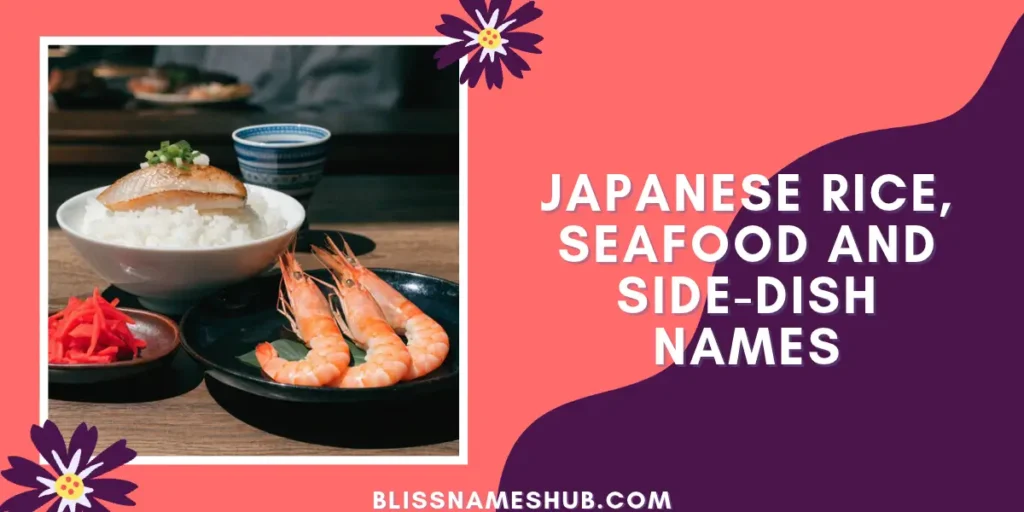
Rice and seafood are central to many Japanese meals, while small side dishes bring variety in taste, color, and texture. This collection includes familiar seafood preparations and everyday accompaniments.
| Name | Kanji / Japanese Name | Meaning | Description |
| Maguro Don | まぐろ丼 | Tuna rice bowl | A bowl of rice topped with slices of tuna, sometimes accompanied by wasabi and shredded seaweed. |
| Sake Don | 鮭丼 | Salmon rice bowl | Rice topped with salmon, which may be grilled, cooked, or served raw when suitable for that preparation. |
| Ikura Don | いくら丼 | Salmon-roe rice bowl | A rice bowl covered with bright salmon roe, valued for its delicate pop and briny taste. |
| Chirashi Sushi | ちらし寿司 | Scattered sushi | Seasoned rice topped with an assortment of seafood, vegetables, and other colorful ingredients. |
| Tekka Don | 鉄火丼 | Tuna sashimi bowl | A simple rice bowl topped with sliced raw tuna and optional seaweed or wasabi. |
| Negitoro Don | ねぎとろ丼 | Minced tuna and scallion bowl | Rice topped with finely chopped fatty tuna and green onions for a soft, savory combination. |
| Salmon Aburi Sushi | 炙りサーモン寿司 | Seared salmon sushi | Sushi topped with salmon lightly torched on the surface for a smoky aroma. |
| Ebi Sushi | 海老寿司 | Shrimp sushi | Sushi made with cooked shrimp, often gently curved over a small mound of seasoned rice. |
| Hamachi Sushi | はまち寿司 | Yellowtail sushi | Yellowtail served over sushi rice, known for its delicate flavor and smooth texture. |
| Tako Sushi | たこ寿司 | Octopus sushi | Slices of cooked octopus paired with seasoned rice for a pleasantly firm bite. |
| Kappa Maki | かっぱ巻き | Cucumber roll | A simple sushi roll filled with cucumber and wrapped in seaweed and rice. |
| Tekka Maki | 鉄火巻き | Tuna roll | A slim seaweed roll filled with tuna, often served as part of a sushi assortment. |
| Futomaki | 太巻き | Thick sushi roll | A substantial sushi roll with several fillings, including vegetables, egg, and sometimes seafood. |
| Hosomaki | 細巻き | Thin sushi roll | A small, narrow sushi roll usually built around one principal filling. |
| Temari Sushi | 手まり寿司 | Ball-shaped sushi | Small rounded portions of sushi rice topped with fish, vegetables, or egg. |
| Oshizushi | 押し寿司 | Pressed sushi | Sushi made by pressing rice and toppings into a mold, creating neat, compact pieces. |
| Battera | バッテラ | Pressed mackerel sushi | A style of pressed sushi traditionally associated with Osaka and often made with cured mackerel. |
| Inarizushi | 稲荷寿司 | Tofu-pocket sushi | Seasoned rice packed inside sweet fried tofu pouches for a portable, mildly sweet bite. |
| Ebi Tempura | 海老天ぷら | Shrimp tempura | Shrimp dipped in a light batter and fried to a crisp golden finish. |
| Kaki Fry | 牡蠣フライ | Fried oysters | Oysters coated in breadcrumbs and fried, commonly served with cabbage and a tangy sauce. |
| Aji Fry | アジフライ | Fried horse mackerel | Fish fillets coated in breadcrumbs and fried until crisp while remaining tender inside. |
| Saba Shioyaki | 鯖の塩焼き | Salt-grilled mackerel | Mackerel grilled with salt, producing flavorful skin and moist flesh. |
| Sanma Shioyaki | さんまの塩焼き | Salt-grilled Pacific saury | A classic autumn fish dish often served with grated daikon and citrus. |
| Katsuo Tataki | 鰹のたたき | Lightly seared bonito | Bonito seared on the outside and served sliced, commonly with ginger, garlic, and citrus dressing. |
| Shirasu Don | しらす丼 | Whitebait rice bowl | Rice topped with tiny whitebait fish, sometimes served raw where appropriate or lightly cooked. |
| Hotate Yaki | 帆立焼き | Grilled scallops | Scallops cooked on a grill or in their shells with simple seasonings. |
| Ika Yaki | いか焼き | Grilled squid | Squid grilled until tender and often brushed with a savory soy-based sauce. |
| Tako Su | たこ酢 | Octopus with vinegar | Sliced octopus served with a refreshing vinegar dressing, often alongside cucumber. |
| Ebi Mayo | 海老マヨ | Shrimp with mayonnaise sauce | Cooked shrimp coated in a creamy sauce, commonly blending mayonnaise with sweet or tangy flavors. |
| Goma Wakame | ごまわかめ | Sesame seaweed salad | Seaweed dressed with sesame and seasonings, served as a refreshing side or appetizer. |
| Kyuri Sunomono | きゅうりの酢の物 | Vinegar cucumber salad | Thin cucumber slices tossed in a light vinegar dressing, sometimes with seaweed or sesame. |
| Daikon Salad | 大根サラダ | Radish salad | Crisp shredded daikon served with a Japanese-style dressing and optional seaweed or bonito flakes. |
| Hiyayashi Tomato | 冷やしトマト | Chilled tomato | Fresh tomato wedges served cold with simple seasoning, a refreshing accompaniment to other dishes. |
| Goma Tofu | ごま豆腐 | Sesame tofu | A smooth sesame-based preparation with a custard-like texture, often served as a small traditional dish. |
| Yuba | 湯葉 | Tofu skin | Delicate sheets formed from heated soy milk, enjoyed fresh, in soup, or with dipping sauces. |
| Konnyaku | こんにゃく | Konjac jelly | A low-calorie, springy food made from konjac, often simmered in broth or included in hot pots. |
| Ganmodoki | がんもどき | Fried tofu fritter | A tofu-based fritter mixed with vegetables and sometimes seaweed, commonly served in simmered dishes. |
| Atsuage | 厚揚げ | Thick fried tofu | Tofu fried with a crisp exterior and soft center, often grilled or simmered in sauce. |
| Chikuwa | ちくわ | Tube-shaped fish cake | A grilled fish paste product with a hollow center, eaten as a snack or used in soups. |
| Kamaboko | 蒲鉾 | Steamed fish cake | A smooth fish paste molded and steamed, often sliced for noodle soups and festive dishes. |
| Narutomaki | 鳴門巻き | Swirled fish cake | A white fish cake with a pink spiral, commonly used as a ramen or noodle-soup topping. |
| Hanpen | はんぺん | Soft fish cake | A fluffy, pale fish cake that can be simmered, grilled, or pan-fried. |
| Satsuma Age | さつま揚げ | Fried fish cake | Seasoned fish paste shaped and deep-fried, commonly served in soups or as a snack. |
| Tsukudani | 佃煮 | Soy-simmered preserved food | Seaweed, small fish, or other ingredients simmered in soy sauce and sugar to create an intensely flavored accompaniment. |
| Shiokara | 塩辛 | Salt-fermented seafood | A traditional strongly flavored seafood preparation made through salting and fermentation. |
| Mentaiko | 明太子 | Seasoned pollock roe | Salted, often chili-seasoned roe eaten with rice or incorporated into noodles and other dishes. |
| Tarako | たらこ | Salted cod roe | Mildly salted fish roe commonly served with rice, pasta, or grilled foods. |
| Ikayaki | いか焼き | Squid pancake or grilled squid | Depending on the region, this name can refer to grilled squid or a savory squid-filled pancake. |
| Tako Wasabi | たこわさび | Octopus with wasabi | Chopped octopus seasoned with wasabi, commonly served as a small appetizer. |
| Fukujinzuke | 福神漬け | Mixed vegetable pickle | A sweet-savory pickle mix frequently served alongside Japanese curry rice. |
| Rakkyo | らっきょう | Pickled Japanese scallion | Small crunchy bulbs pickled in a sweet vinegar mixture and commonly served with curry. |
Japanese Street Food and Snack Names
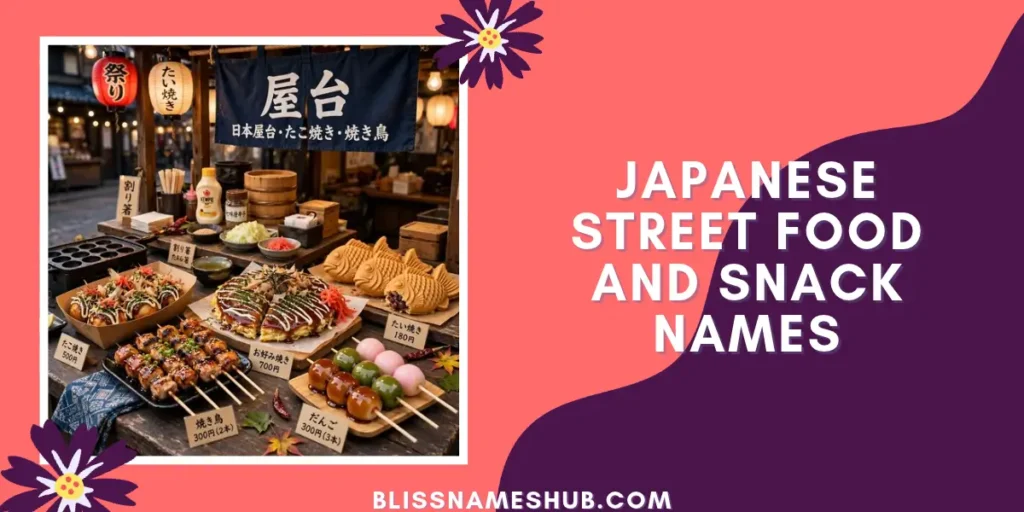
Japanese street food is known for its lively stalls, festival atmosphere, and easy-to-eat portions. These Japanese Food Names include popular festival treats, fried snacks, savory pancakes, and quick bites enjoyed throughout Japan.
| Name | Kanji / Japanese Name | Meaning | Description |
| Taiyaki | たい焼き | Sea-bream-shaped cake | A fish-shaped cake cooked in a mold and traditionally filled with sweet red bean paste. |
| Dango | 団子 | Rice-flour dumplings | Chewy dumplings served on skewers, sometimes coated with sweet soy glaze. |
| Mitarashi Dango | みたらし団子 | Sweet soy-glazed dumplings | Grilled rice dumplings covered in a glossy, sweet-savory sauce. |
| Hanami Dango | 花見団子 | Flower-viewing dumplings | Three-color dumplings associated with springtime cherry blossom viewing. |
| Dorayaki | どら焼き | Red bean pancake sandwich | Two soft pancakes sandwiching sweet red bean paste. |
| Daifuku | 大福 | Filled rice cake | A soft mochi shell surrounding a filling such as sweet bean paste or fruit. |
| Ichigo Daifuku | いちご大福 | Strawberry-filled mochi | A soft rice cake containing sweet bean paste and a fresh strawberry. |
| Yaki Imo | 焼き芋 | Roasted sweet potato | Sweet potatoes slowly roasted until their flesh becomes soft and naturally sugary. |
| Takoyaki Senbei | たこ焼きせんべい | Takoyaki-style rice cracker | A crunchy snack inspired by the savory flavor of octopus balls. |
| Senbei | 煎餅 | Rice crackers | Crunchy rice-based crackers that may be grilled, baked, or seasoned with soy sauce. |
| Arare | あられ | Small rice crackers | Bite-sized rice snacks with a crisp texture and a variety of savory seasonings. |
| Okaki | おかき | Mochi rice crackers | Crunchy snacks made from glutinous rice cakes that are dried and cooked. |
| Kakigori | かき氷 | Shaved ice | Finely shaved ice topped with flavored syrups, fruit, or condensed milk. |
| Crepes | クレープ | Thin filled pancakes | Japanese crepes are often folded into cones and filled with fruit, cream, or sweet sauces. |
| Imagawayaki | 今川焼き | Filled griddled cake | A thick round cake cooked in a mold and filled with sweet bean paste or custard. |
| Baby Castella | ベビーカステラ | Mini sponge cakes | Small, soft cakes commonly sold at festivals and enjoyed as a warm snack. |
| Castella | カステラ | Sponge cake | A moist, fine-textured cake introduced through historical Portuguese-Japanese contact. |
| Anpan | あんパン | Sweet bean bread | A soft bread roll filled with sweet red bean paste. |
| Shio Pan | 塩パン | Salt bread | A buttery bread roll finished with salt, often featuring a crisp base. |
| Agepan | 揚げパン | Fried bread | Bread fried and coated with sugar or other toppings, popular as a nostalgic school-style snack. |
| Yakisoba Pan | 焼きそばパン | Noodle-filled bread | A soft bread roll filled with savory fried noodles for a filling, casual meal. |
| Korokke Pan | コロッケパン | Croquette bread | Bread filled with a fried croquette and often dressed with a tangy sauce. |
| Melonpan Ice Cream | メロンパンアイス | Melon bread with ice cream | A sweet bread shell paired with ice cream for a combination of warm crunch and cold creaminess. |
| Ikayaki | いか焼き | Grilled squid | Squid cooked over high heat and brushed with a savory sauce at street stalls. |
| Yaki Tomorokoshi | 焼きとうもろこし | Grilled corn | Corn grilled until fragrant and often brushed with soy sauce. |
| Jaga Butter | じゃがバター | Buttered potato | A hot potato split open and served with butter and optional savory toppings. |
| Buta Man | 豚まん | Pork bun | A steamed bun filled with seasoned pork, especially popular in western Japan. |
| Age Gyoza | 揚げ餃子 | Fried dumplings | Dumplings fried until crisp, served with a dipping sauce. |
| Ebi Senbei | えびせんべい | Shrimp crackers | Crisp crackers made with shrimp or shrimp flavoring, enjoyed as a salty snack. |
| Kushiage | 串揚げ | Deep-fried skewers | Meat, seafood, or vegetables coated in breadcrumbs and fried on skewers. |
| Kushikatsu | 串カツ | Fried skewered cutlet | Breaded and fried skewers, commonly associated with Osaka’s casual food culture. |
| Yakitori Negima | ねぎま | Chicken and scallion skewer | Grilled pieces of chicken alternate with scallions on a skewer. |
| Tsukune | つくね | Minced chicken ball | Seasoned minced chicken shaped into balls or patties and grilled on skewers. |
| Buta Kushiyaki | 豚串焼き | Grilled pork skewer | Pieces of pork grilled and seasoned with salt or a savory glaze. |
| Beef Yaki | 牛焼き | Grilled beef | Thin or bite-sized beef grilled with simple seasonings or a sweet-savory sauce. |
| Menchi Katsu | メンチカツ | Minced-meat cutlet | Seasoned minced meat coated in breadcrumbs and fried until golden. |
| Chicken Nanban | チキン南蛮 | Sweet-vinegar chicken | Fried chicken coated with a tangy sauce and often served with tartar sauce. |
| Tori Karaage | 鶏の唐揚げ | Japanese fried chicken | Marinated chicken pieces fried for a crunchy exterior and juicy center. |
| Ebi Furai | エビフライ | Breaded fried shrimp | Shrimp coated in breadcrumbs and fried, often served with tartar sauce. |
| Chikuwa Isobe Age | ちくわの磯辺揚げ | Seaweed-battered fish cake | Chikuwa dipped in a seaweed-flavored batter and fried until crisp. |
| Cheese Harumaki | チーズ春巻き | Cheese spring rolls | Crisp rolls filled with cheese, sometimes combined with vegetables or meat. |
| Harumaki | 春巻き | Spring rolls | Thin wrappers filled with vegetables, meat, or seafood and fried until crunchy. |
| Nikuman | 肉まん | Steamed meat bun | A soft, warm bun containing savory meat filling, especially popular in colder weather. |
| Anko Mochi | あんこ餅 | Sweet bean mochi | Chewy rice cake served with or filled with sweet red bean paste. |
| Warabi Mochi | わらび餅 | Soft starch jelly | A cool, jelly-like confection usually coated in roasted soybean powder. |
| Kuzumochi | 葛餅 | Kudzu starch cake | A traditional Japanese sweet made from starch and commonly served with syrup and soybean powder. |
| Yatsuhashi | 八ツ橋 | Kyoto cinnamon sweet | A Kyoto specialty made as a crisp cinnamon biscuit or a soft folded confection. |
| Ningyo Yaki | 人形焼 | Doll-shaped cake | Small cakes molded into figures or shapes and often filled with sweet bean paste. |
| Karinto | かりんとう | Fried sugar-coated snack | Crunchy pieces of fried dough coated with brown sugar or another sweet glaze. |
| Taiyaki Ice Cream | たい焼きアイス | Fish-shaped ice cream treat | A modern dessert inspired by taiyaki, often pairing a fish-shaped shell with ice cream. |
Japanese Sweets, Desserts and Drink Names

Japanese desserts often use rice, beans, tea, fruit, and delicate sweeteners. Many traditional sweets are served with tea, while contemporary treats combine Japanese flavors with cakes, ice cream, and café drinks.
| Name | Kanji / Japanese Name | Meaning | Description |
| Wagashi | 和菓子 | Traditional Japanese sweets | A broad category of confections often shaped around seasons, flowers, and cultural occasions. |
| Namagashi | 生菓子 | Fresh Japanese sweets | Soft, carefully crafted sweets commonly served at tea gatherings and special celebrations. |
| Nerikiri | 練り切り | Shaped bean-paste sweet | A smooth confection molded into flowers, leaves, and seasonal designs. |
| Sakuramochi | 桜餅 | Cherry-blossom rice cake | A pink or rosy sweet rice cake with bean paste, traditionally wrapped in a cherry leaf. |
| Kashiwa Mochi | 柏餅 | Oak-leaf rice cake | A rice cake filled with sweet bean paste and wrapped in an oak leaf for Children’s Day. |
| Ohagi | おはぎ | Bean-coated rice sweet | Soft rice portions covered with sweet red bean paste, sesame, or soybean powder. |
| Botamochi | ぼたもち | Peony-season rice sweet | A sweet rice confection similar to ohagi, traditionally associated with spring observances. |
| Zenzai | ぜんざい | Sweet red bean soup | A warm dessert of sweet red beans served with mochi or other rice-cake pieces. |
| Oshiruko | おしるこ | Sweet bean-paste soup | A comforting sweet soup made from red bean paste and commonly served with toasted mochi. |
| Anmitsu | あんみつ | Bean paste and jelly dessert | A bowl of agar jelly, sweet beans, fruit, and syrup, sometimes topped with ice cream. |
| Mitsumame | みつ豆 | Syrup and bean dessert | A traditional combination of agar cubes, sweet beans, fruit, and syrup. |
| Cream Anmitsu | クリームあんみつ | Anmitsu with ice cream | A variation of anmitsu topped with a scoop of ice cream for a creamy finish. |
| Monaka | 最中 | Wafer-shell sweet | Crisp, thin wafers filled with sweet bean paste, often made in decorative shapes. |
| Rakugan | 落雁 | Pressed dry confection | A delicate dry sweet made from sugar and flour or starch, pressed into molds. |
| Higashi | 干菓子 | Dry Japanese sweets | A category of dry confections often served during tea ceremonies. |
| Konpeito | 金平糖 | Small sugar candy | Colorful, star-shaped sugar candies with a crunchy texture and a long history in Japan. |
| Ame | 飴 | Candy | A general term for Japanese sweets made from sugar or starch syrup, in many flavors and shapes. |
| Kuro Mitsu | 黒蜜 | Brown sugar syrup | A rich syrup made from dark sugar, commonly poured over Japanese desserts. |
| Kinako Mochi | きなこ餅 | Soybean-powder rice cake | Soft mochi coated in roasted soybean powder, sometimes lightly sweetened with sugar. |
| Abekawa Mochi | 安倍川餅 | Soybean-coated mochi | A traditional sweet associated with Shizuoka, typically covered with kinako and sugar. |
| Uiro | ういろう | Steamed sweet cake | A soft, chewy steamed confection made from rice flour or other starches and sugar. |
| Mizu Yokan | 水羊羹 | Soft bean jelly | A lighter, softer form of yokan that is especially refreshing when served chilled. |
| Kuzukiri | 葛切り | Kudzu starch noodles | Translucent starch noodles served as a dessert with brown sugar syrup. |
| Anmaki | あん巻き | Bean-paste rolled pancake | A thin pancake wrapped around sweet red bean filling. |
| Dorayaki Ice Cream | どら焼きアイス | Pancake sandwich with ice cream | A modern dessert combining dorayaki-style pancakes with a cool ice cream filling. |
| Matcha Ice Cream | 抹茶アイスクリーム | Green tea ice cream | Creamy ice cream flavored with matcha, balancing sweetness with a slightly earthy taste. |
| Mochi Ice Cream | もちアイス | Ice cream in rice cake | Ice cream wrapped in a thin, chewy layer of sweet rice dough. |
| Hojicha Pudding | ほうじ茶プリン | Roasted tea pudding | A smooth pudding flavored with roasted green tea, known for its toasted aroma. |
| Matcha Pudding | 抹茶プリン | Green tea pudding | A soft dessert infused with matcha and often served with cream or sweet bean paste. |
| Purin | プリン | Japanese custard pudding | A smooth egg custard, usually served with a caramel sauce. |
| Castella Cake | カステラ | Honey-style sponge cake | A moist sponge cake commonly served in slices with tea. |
| Japanese Cheesecake | チーズケーキ | Japanese-style cheesecake | A light, airy cake with a delicate texture and a gentle cream-cheese flavor. |
| Soufflé Pancakes | スフレパンケーキ | Fluffy pancakes | Thick, airy pancakes made with whipped egg whites and often served with fruit or cream. |
| Anpan | あんパン | Bean-filled bread | A sweet bread roll filled with red bean paste, often enjoyed with tea or coffee. |
| Shokupan | 食パン | Japanese milk bread | A soft, square loaf with a tender crumb, used for toast and sandwiches. |
| Cream Pan | クリームパン | Cream-filled bread | A soft bun filled with sweet custard cream. |
| Melonpan | メロンパン | Cookie-topped bread | Bread with a crisp, patterned sweet crust that resembles the outside of a melon. |
| Anmitsu Parfait | あんみつパフェ | Layered Japanese dessert | A café-style dessert combining jelly, sweet beans, fruit, ice cream, and syrup. |
| Matcha Latte | 抹茶ラテ | Matcha milk drink | Matcha blended with milk for a creamy drink with a grassy, earthy flavor. |
| Hojicha Latte | ほうじ茶ラテ | Roasted green tea latte | A warm or iced milk drink made with roasted green tea powder or infusion. |
| Genmaicha | 玄米茶 | Brown-rice green tea | Green tea blended with roasted rice, producing a toasty and mellow flavor. |
| Sencha | 煎茶 | Steeped green tea | A popular Japanese green tea with fresh, grassy, and sometimes gently astringent notes. |
| Gyokuro | 玉露 | Shaded green tea | A prized green tea grown under shade, often known for its rich, savory taste. |
| Mugicha | 麦茶 | Barley tea | A caffeine-free roasted barley infusion commonly served cold, especially in summer. |
| Sakura Tea | 桜茶 | Cherry-blossom tea | A floral drink often prepared with preserved cherry blossoms for celebratory occasions. |
| Amazake | 甘酒 | Sweet fermented rice drink | A traditional sweet rice drink that may be made with koji or sake lees; alcohol content depends on the preparation. |
| Ramune | ラムネ | Fizzy Japanese soft drink | A carbonated drink recognized for its distinctive glass bottle and marble stopper. |
| Calpis | カルピス | Cultured milk drink | A sweet-tangy fermented milk beverage commonly mixed with water or sparkling water. |
| Ume Soda | 梅ソーダ | Plum soda | A refreshing fizzy drink flavored with Japanese plum syrup or ume preparation. |
| Yuzu Tea | 柚子茶 | Citrus tea drink | A fragrant drink made with yuzu citrus preserve mixed into hot or cold water. |
Japanese Regional Food Names
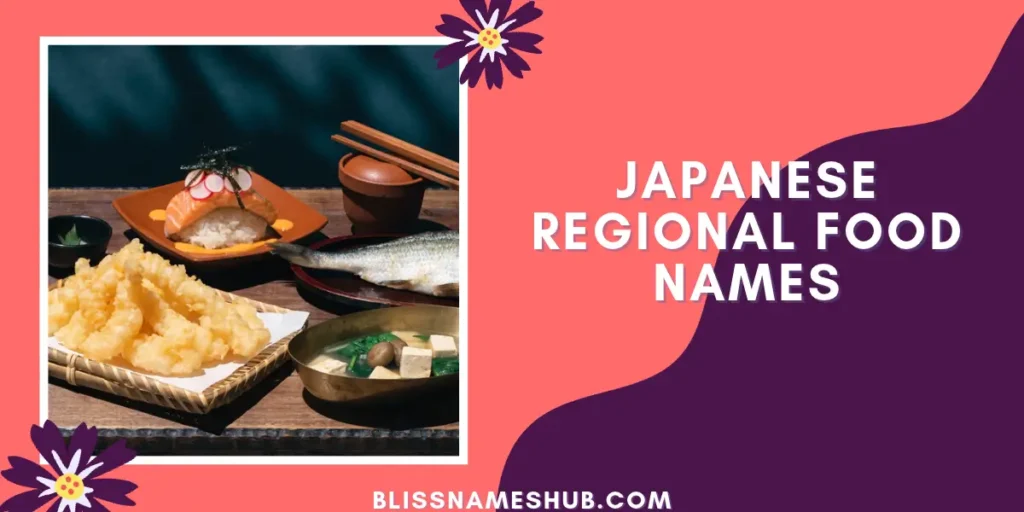
Japan’s regional food traditions reflect local climates, farming, fishing, and historical influences. These Japanese Food Names introduce specialties associated with particular prefectures and cities, helping readers connect dishes with their places of origin.
| Name | Kanji / Japanese Name | Meaning | Description |
| Hakata Motsunabe | 博多もつ鍋 | Hakata offal hot pot | A Fukuoka specialty featuring offal, cabbage, garlic chives, and a flavorful broth. |
| Mizutaki | 水炊き | Chicken hot pot | A Fukuoka dish in which chicken and vegetables simmer in a gentle broth. |
| Mentaiko Rice | 明太子ご飯 | Spicy cod-roe rice | Rice served with spicy seasoned pollock roe, a well-known Fukuoka ingredient. |
| Nagasaki Sara Udon | 長崎皿うどん | Nagasaki plate noodles | Noodles topped with a thick mixture of vegetables, seafood, and sometimes pork. |
| Nagasaki Castella | 長崎カステラ | Nagasaki sponge cake | A famous regional cake with a moist texture and a lightly sweet finish. |
| Champon | ちゃんぽん | Mixed noodle dish | Nagasaki’s hearty noodle dish combines seafood, meat, vegetables, and broth. |
| Hakata Gyoza | 博多餃子 | Hakata dumplings | Small dumplings commonly pan-fried and served with dipping sauce. |
| Saga Beef | 佐賀牛 | Saga beef | Beef from Saga Prefecture prized for its tenderness and marbling. |
| Karashi Renkon | 辛子蓮根 | Mustard-stuffed lotus root | A Kumamoto specialty of lotus root filled with mustard miso and coated before frying. |
| Basashi | 馬刺し | Horse-meat sashimi | Thinly sliced raw horse meat served as a regional specialty in Kumamoto; it requires careful food-safety handling. |
| Hakata Udon | 博多うどん | Hakata-style udon | Fukuoka udon known for soft noodles and a light, flavorful broth. |
| Chicken Nanban | チキン南蛮 | Vinegar-glazed chicken | A Miyazaki specialty of fried chicken served with sweet vinegar sauce and tartar sauce. |
| Miyazaki Jidori | 宮崎地鶏 | Miyazaki local chicken | A regional chicken specialty often grilled to highlight its rich flavor and firm texture. |
| Hiyajiru | 冷や汁 | Chilled soup | A Miyazaki summer dish made with a chilled miso-based mixture, often served over rice. |
| Kagoshima Kurobuta | 鹿児島黒豚 | Kagoshima black pork | Pork from a locally renowned breed, used in cutlets, shabu-shabu, and other dishes. |
| Satsuma Age | さつま揚げ | Fried fish cake | A Kagoshima specialty made from seasoned fish paste and fried until golden. |
| Okinawa Soba | 沖縄そば | Okinawan noodle soup | Wheat noodles in broth, traditionally topped with pork and scallions. |
| Goya Champuru | ゴーヤーチャンプルー | Bitter melon stir-fry | An Okinawan home-style dish combining bitter melon, tofu, egg, and often pork. |
| Rafute | ラフテー | Okinawan braised pork | Pork belly slowly simmered until tender in a sweet-savory seasoning. |
| Taco Rice | タコライス | Taco-style rice | An Okinawan-inspired dish topped with seasoned meat, lettuce, cheese, and salsa. |
| Jushi | ジューシー | Okinawan mixed rice | Seasoned rice cooked with vegetables, pork, or other ingredients. |
| Ishigaki Beef | 石垣牛 | Ishigaki beef | Beef from Ishigaki Island known for its marbling and use in grilled dishes. |
| Sapporo Miso Ramen | 札幌味噌ラーメン | Sapporo miso ramen | A Hokkaido specialty featuring rich miso broth and hearty noodle toppings. |
| Soup Curry | スープカレー | Spiced soup curry | A Sapporo favorite consisting of a thin, aromatic curry with vegetables and meat. |
| Jingisukan | ジンギスカン | Grilled lamb or mutton | Hokkaido-style grilled meat cooked with vegetables on a distinctive domed grill. |
| Ishikari Nabe | 石狩鍋 | Salmon hot pot | A Hokkaido hot pot made with salmon, vegetables, and miso-seasoned broth. |
| Zangi | ザンギ | Hokkaido fried chicken | Seasoned pieces of chicken deep-fried until crisp, similar to karaage. |
| Butadon | 豚丼 | Pork rice bowl | A Tokachi-area specialty of grilled pork over rice with a sweet soy-based glaze. |
| Hokkaido Seafood Don | 北海道海鮮丼 | Hokkaido seafood bowl | Rice topped with regional seafood such as salmon, crab, scallops, or roe. |
| Hakodate Shio Ramen | 函館塩ラーメン | Hakodate salt ramen | A regional ramen style recognized for its clear, salt-seasoned broth. |
| Kiritanpo | きりたんぽ | Grilled rice cylinder | Akita’s mashed rice shaped around a stick and grilled, often added to hot pot. |
| Inaniwa Udon | 稲庭うどん | Inaniwa-style udon | A celebrated Akita noodle known for its smooth texture and relatively thin shape. |
| Wanko Soba | わんこそば | Small-serving soba | An Iwate dining tradition in which small servings of soba are repeatedly offered. |
| Morioka Jajamen | 盛岡じゃじゃ麺 | Morioka sauce noodles | Wheat noodles topped with a savory meat-and-miso sauce, cucumber, and other condiments. |
| Hittsumi Jiru | ひっつみ汁 | Hand-torn dough soup | An Iwate comfort dish of torn dough pieces cooked with vegetables in broth. |
| Gyutan | 牛タン | Grilled beef tongue | A Sendai specialty often served with rice, pickles, and oxtail soup. |
| Zunda Mochi | ずんだ餅 | Edamame-paste mochi | Rice cakes topped with a bright green paste made from mashed young soybeans. |
| Sendai Seri Nabe | せり鍋 | Japanese parsley hot pot | A Sendai hot pot featuring seri, a fragrant leafy plant, along with meat and broth. |
| Kitakata Ramen | 喜多方ラーメン | Kitakata ramen | Fukushima ramen known for its curly noodles and soy-based soup. |
| Kozuyu | こづゆ | Clear festive soup | A traditional Aizu dish containing small dried scallops, vegetables, and other ingredients. |
| Yonezawa Beef | 米沢牛 | Yonezawa beef | A renowned Yamagata beef specialty valued for its rich flavor and marbling. |
| Imoni | 芋煮 | Taro stew | A Yamagata autumn favorite featuring taro, meat, and vegetables cooked in broth. |
| Hittsumi | ひっつみ | Torn-dough dish | Hand-torn dough pieces cooked with seasonal vegetables, especially in northeastern Japan. |
| Hōtō | ほうとう | Flat-noodle miso stew | Yamanashi’s filling dish of broad noodles, pumpkin, and vegetables in miso broth. |
| Shizuoka Oden | 静岡おでん | Shizuoka-style oden | Dark-broth simmered ingredients traditionally served with powdered fish and seaweed seasoning. |
| Hamamatsu Gyoza | 浜松餃子 | Hamamatsu dumplings | Pan-fried dumplings often arranged in a circle and served with a mound of bean sprouts. |
| Nagoya Tebasaki | 名古屋手羽先 | Nagoya chicken wings | Fried chicken wings seasoned with a sweet-savory glaze, pepper, and sesame. |
| Miso Katsu | 味噌カツ | Miso-sauce cutlet | A Nagoya favorite of breaded pork cutlet topped with a rich red miso sauce. |
| Hitsumabushi | ひつまぶし | Eel served with rice | A Nagoya eel dish traditionally enjoyed in several ways, including with condiments and broth. |
| Ise Udon | 伊勢うどん | Ise thick noodles | A Mie specialty with very thick, soft udon and a concentrated soy-based sauce. |
| Matsusaka Beef | 松阪牛 | Matsusaka beef | A celebrated Mie beef variety often prepared as steak or thinly sliced for hot pot. |
Japanese Food Names for Restaurant Menus and Food Projects
Some Japanese Food Names are particularly useful when naming a food blog, a restaurant menu section, a cooking series, or a themed food project. This category mixes culinary terms, ingredients, and recognizable dish names that communicate a clear Japanese food identity.
| Name | Kanji / Japanese Name | Meaning | Description |
| Gohan | ご飯 | Cooked rice or meal | A familiar Japanese word associated with everyday meals and a welcoming home-cooked atmosphere. |
| Washoku Table | 和食の食卓 | Traditional Japanese dining table | A phrase suitable for a food series focused on balanced meals and Japanese dining customs. |
| Sushi Bar | 寿司バー | Sushi restaurant counter | A straightforward menu or restaurant concept centered on sushi and seafood. |
| Ramen House | ラーメンハウス | Ramen restaurant | A recognizable name for a casual dining concept specializing in noodle soups. |
| Bento Box | 弁当 | Packed meal | A meal arranged in a compartmentalized box with rice, protein, and side dishes. |
| Ekiben | 駅弁 | Railway-station boxed meal | A regional boxed meal sold at train stations, often showcasing local ingredients. |
| Makunouchi Bento | 幕の内弁当 | Assorted boxed meal | A traditional bento containing rice, grilled fish or meat, and several side dishes. |
| Onigiri Shop | おにぎり店 | Rice-ball shop | A suitable concept for a small food business specializing in filled rice balls. |
| Donburi House | 丼屋 | Rice-bowl restaurant | A menu concept built around rice bowls with different toppings and sauces. |
| Teishoku | 定食 | Set meal | A complete meal served with a main dish, rice, soup, and side dishes. |
| Shokudo | 食堂 | Casual dining hall | A Japanese term for an everyday restaurant serving affordable, comforting meals. |
| Izakaya | 居酒屋 | Japanese pub | A casual restaurant serving small dishes and drinks in a social atmosphere. |
| Yatai | 屋台 | Food stall | A mobile or small street-food stall associated with casual dining and local specialties. |
| Kissaten | 喫茶店 | Traditional café | A Japanese-style café often associated with coffee, toast, sandwiches, and nostalgic interiors. |
| Chaya | 茶屋 | Tea house | A traditional-sounding name for a tea-focused café or a calm dining space. |
| Wagashi Shop | 和菓子店 | Traditional sweets shop | A shop concept dedicated to Japanese confections, seasonal sweets, and tea pairings. |
| Mochi House | もち屋 | Mochi shop | A simple name for a business featuring rice cakes, filled mochi, and seasonal variations. |
| Matcha Café | 抹茶カフェ | Green tea café | A café concept centered on matcha drinks, desserts, and Japanese tea flavors. |
| Udonya | うどん屋 | Udon shop | A familiar name for an eatery specializing in thick wheat noodles and broths. |
| Sobaya | そば屋 | Soba shop | A noodle restaurant focused on buckwheat dishes, including hot soup and cold dipping noodles. |
| Tempura-ya | 天ぷら屋 | Tempura restaurant | A restaurant name that signals battered seafood and vegetables fried to order. |
| Yakitori-ya | 焼き鳥屋 | Grilled chicken shop | A casual dining concept specializing in skewered chicken and grilled accompaniments. |
| Okonomiyaki-ya | お好み焼き屋 | Savory pancake shop | A food concept built around customizable Japanese cabbage pancakes. |
| Takoyaki Stand | たこ焼き店 | Octopus-ball stall | A natural name for a street-food business serving hot, savory batter balls. |
| Curry-ya | カレー屋 | Curry shop | A casual restaurant concept featuring Japanese curry with rice, cutlets, or vegetables. |
| Sakanaya | 魚屋 | Fish shop | A traditional word for a fish seller or seafood-focused business. |
| Yasai Shokudo | 野菜食堂 | Vegetable dining hall | A concept name for a restaurant emphasizing vegetable dishes and seasonal produce. |
| Kome Kitchen | 米キッチン | Rice kitchen | A contemporary name for a project centered on rice dishes and Japanese home cooking. |
| Umami Kitchen | うま味キッチン | Savory-flavor kitchen | A modern food-brand idea referring to the deep savory taste found in many Japanese dishes. |
| Sakura Bento | さくら弁当 | Cherry-blossom boxed meal | A gentle, seasonal name suitable for a bento service or Japanese lunch concept. |
| Hinode Sushi | 日の出寿司 | Sunrise sushi | A memorable, sunrise-inspired name for a sushi menu or themed food project. |
| Komorebi Café | 木漏れ日カフェ | Sunlight-through-leaves café | A poetic concept name for a peaceful café inspired by light filtering through trees. |
| Tsuki Ramen | 月ラーメン | Moon ramen | A distinctive themed name for a ramen concept with a calm, nighttime identity. |
| Hoshi Sweets | 星スイーツ | Star sweets | A playful name for a dessert collection featuring decorative cakes and small treats. |
| Kaze Kitchen | 風キッチン | Wind kitchen | A light, contemporary name for a Japanese-inspired food project. |
| Mori Table | 森テーブル | Forest table | A nature-inspired concept suited to seasonal menus and earthy ingredients. |
| Yume Café | 夢カフェ | Dream café | A friendly, imaginative name for a café featuring Japanese desserts and drinks. |
| Aoi Kitchen | 青いキッチン | Blue kitchen | A simple branded concept with a fresh, clean identity. |
| Niji Mochi | 虹もち | Rainbow mochi | A colorful name for a range of rice cakes featuring different fillings and flavors. |
| Kumo Bakery | 雲ベーカリー | Cloud bakery | A soft, memorable concept name for a bakery known for airy breads and delicate sweets. |
| Haru Table | 春テーブル | Spring table | A seasonal dining concept inspired by fresh vegetables and springtime flavors. |
| Natsu Soba | 夏そば | Summer soba | A seasonal menu name suited to chilled noodles and light summer meals. |
| Aki Kitchen | 秋キッチン | Autumn kitchen | A name for a menu or food series celebrating mushrooms, pumpkin, and autumn produce. |
| Fuyu Nabe | 冬鍋 | Winter hot pot | A seasonal concept for hearty hot pots, soups, and warming winter meals. |
| Kizuna Kitchen | 絆キッチン | Bond kitchen | A welcoming name inspired by connection, family meals, and shared dining. |
| Kokoro Gohan | こころご飯 | Heartfelt meal | A warm name for a home-cooking blog or a food project centered on comfort dishes. |
| Nihon no Aji | 日本の味 | Taste of Japan | A broad phrase suitable for a collection of regional dishes and traditional recipes. |
| Oishii Days | おいしい日々 | Delicious days | A friendly name for a Japanese food blog, recipe collection, or everyday cooking series. |
| Shun Kitchen | 旬キッチン | Seasonal kitchen | A concept inspired by shun, the period when an ingredient is at its best. |
| Tabemono Note | 食べ物ノート | Food notebook | A practical name for a food journal, recipe site, or Japanese culinary learning project. |
Japanese Food Ingredient and Flavor Names

Japanese cooking relies on ingredients that add depth, aroma, texture, and seasonal character. These names are useful for understanding recipes, reading ingredient labels, and recognizing common flavors in Japanese dishes.
| Name | Kanji / Japanese Name | Meaning | Description |
| Kome | 米 | Rice | A foundational grain used in everyday meals, sushi, rice cakes, and many traditional sweets. |
| Mochigome | もち米 | Glutinous rice | A sticky rice variety used for mochi, sekihan, and other chewy rice preparations. |
| Genmai | 玄米 | Brown rice | Whole-grain rice with its bran layer retained, giving it a nuttier taste and firmer texture. |
| Shiro Gohan | 白ご飯 | Plain white rice | Steamed white rice served as the foundation of countless Japanese meals. |
| Miso | 味噌 | Fermented soybean paste | A savory paste used in soups, marinades, dressings, and simmered dishes. |
| Shoyu | 醤油 | Soy sauce | A fermented seasoning that contributes saltiness, color, and deep savory flavor. |
| Tamari | たまり醤油 | Tamari soy sauce | A rich soy sauce traditionally associated with miso production; ingredients vary by product. |
| Mirin | みりん | Sweet cooking rice seasoning | A sweet rice-based seasoning used in glazes, simmered foods, and sauces. |
| Sake | 酒 | Alcoholic rice beverage | A fermented rice drink that is also used in cooking to contribute aroma and flavor. |
| Dashi | だし | Japanese stock | A foundational broth commonly made from kombu, bonito flakes, dried fish, or plant-based ingredients. |
| Kombu | 昆布 | Kelp | Seaweed used to make dashi and add a natural, savory depth to soups and sauces. |
| Katsuobushi | 鰹節 | Dried bonito flakes | Thin shavings of processed bonito used for stock and as a topping for savory dishes. |
| Niboshi | 煮干し | Dried small fish | Small dried fish used to prepare flavorful broths for ramen, miso soup, and other dishes. |
| Shiitake | 椎茸 | Shiitake mushroom | An aromatic mushroom used fresh or dried in soups, rice dishes, and simmered foods. |
| Enoki | えのき | Enoki mushroom | Slender white mushrooms often added to soups, hot pots, and stir-fries. |
| Shimeji | しめじ | Shimeji mushroom | Small clustered mushrooms with an earthy flavor, suitable for rice and noodle dishes. |
| Maitake | 舞茸 | Maitake mushroom | A frilly mushroom valued for its rich aroma and use in sautéed or simmered dishes. |
| Daikon | 大根 | Japanese white radish | A crisp, mild root vegetable used raw, pickled, grated, or slowly simmered. |
| Gobo | ごぼう | Burdock root | An earthy root vegetable commonly used in kinpira and traditional mixed dishes. |
| Renkon | 蓮根 | Lotus root | A crunchy root with distinctive holes, often sliced for tempura or simmered dishes. |
| Satsumaimo | さつまいも | Sweet potato | A naturally sweet root used in roasted snacks, tempura, and desserts. |
| Kabocha | かぼちゃ | Japanese pumpkin | A dense, sweet pumpkin with orange flesh, often simmered, roasted, or battered for tempura. |
| Goya | ゴーヤー | Bitter melon | A bitter green vegetable especially associated with Okinawan cooking and champuru stir-fries. |
| Shiso | 紫蘇 | Japanese perilla | A fragrant herb used with sashimi, noodles, pickles, and rice dishes. |
| Mitsuba | 三つ葉 | Japanese parsley | A delicate herb used to finish soups, egg dishes, and traditional meals. |
| Negi | ねぎ | Japanese green onion | A common aromatic vegetable used raw or cooked in noodles, soups, and grilled dishes. |
| Wasabi | わさび | Japanese horseradish | A pungent green condiment traditionally served with sushi and sashimi. |
| Karashi | からし | Japanese mustard | A sharp mustard condiment used with oden, dumplings, and other savory foods. |
| Yuzu | 柚子 | Japanese citrus | A fragrant citrus fruit whose juice and zest add brightness to sauces, soups, and sweets. |
| Sudachi | すだち | Small Japanese citrus | A tart green citrus commonly squeezed over grilled fish, noodles, and seasonal dishes. |
| Ponzu | ポン酢 | Citrus-seasoned sauce | A tangy sauce often combining citrus juice with soy sauce and other seasonings. |
| Goma | ごま | Sesame | Sesame seeds add nuttiness to dressings, noodles, vegetables, and rice dishes. |
| Kinako | きな粉 | Roasted soybean powder | A nutty powder commonly sprinkled over mochi and traditional Japanese sweets. |
| Anko | あんこ | Sweet bean paste | A filling made mainly from azuki beans and sugar, used in many Japanese desserts. |
| Azuki | 小豆 | Small red beans | Beans commonly cooked into sweet paste for mochi, dorayaki, and other confections. |
| Kuromame | 黒豆 | Black soybeans | Sweet-simmered black soybeans traditionally served as part of New Year cuisine. |
| Tofu | 豆腐 | Soybean curd | A versatile soy food enjoyed chilled, grilled, fried, simmered, or added to soup. |
| Aburaage | 油揚げ | Fried tofu pouch | Thin tofu slices fried until they form a flexible outer layer for dishes such as inari sushi. |
| Nori | 海苔 | Edible seaweed | Dried seaweed used to wrap sushi and rice balls or sprinkled over noodles. |
| Wakame | わかめ | Edible seaweed | A tender sea vegetable often found in miso soup, salads, and noodle dishes. |
| Hijiki | ひじき | Dark edible seaweed | A sea vegetable commonly simmered with carrots, soybeans, or tofu for a traditional side dish. |
| Ume | 梅 | Japanese plum | A tart fruit used for pickling, preserves, syrups, and traditional flavorings. |
| Umeboshi | 梅干し | Pickled plum | A salty, sour preparation of ume often eaten with rice or used as an onigiri filling. |
| Matcha | 抹茶 | Powdered green tea | Finely ground green tea used in drinks, traditional sweets, cakes, and ice cream. |
| Hojicha | ほうじ茶 | Roasted green tea | A roasted tea with a warm, toasted aroma that works well in drinks and desserts. |
| Kuromitsu | 黒蜜 | Dark sugar syrup | A deep, sweet syrup made from dark sugar and served with Japanese desserts. |
| Rice Vinegar | 米酢 | Rice vinegar | A mild vinegar commonly used to season sushi rice and prepare refreshing dressings. |
| Panko | パン粉 | Japanese breadcrumbs | Light, flaky breadcrumbs that produce a crisp coating for cutlets and fried seafood. |
| Yamaimo | 山芋 | Japanese mountain yam | A starchy root that can be grated into a smooth, stretchy topping for noodles and rice. |
Exploring Japanese Food Names
Exploring Japanese Food Names is a simple way to learn more about Japan’s popular dishes, traditional meals, and everyday snacks. Japanese food includes a wide range of flavors and ingredients, such as rice, noodles, seafood, vegetables, and sweet rice cakes.
Some food names are familiar around the world, like sushi, ramen, and tempura, while others are less well known outside Japan. Each name helps identify a particular dish and can give you an idea of its ingredients or preparation style.
Whether you are learning Japanese, planning to visit Japan, reading a restaurant menu, or looking for creative food-related names, understanding these words can make Japanese cuisine easier and more enjoyable to explore.
Conclusion
Japanese Food Names reflect a rich culinary tradition built around rice, noodles, seafood, vegetables, seasonal ingredients, and carefully prepared sweets.
From familiar favorites such as sushi and ramen to regional specialties, traditional soups, street snacks, and delicate wagashi, each name offers a small glimpse into Japanese food culture.
This collection of 400+ Japanese Food Names can help you learn food vocabulary, plan a Japanese-inspired menu, explore regional dishes, or choose a suitable theme for a recipe blog.
For the most accurate use, remember that Japanese writing varies by dish, and not every food name has a standard kanji form. Exploring the original Japanese spelling alongside its meaning makes the experience more informative and enjoyable.
Frequently Asked Questions
Q1: What are the most popular Japanese food names?
Ans: Sushi, ramen, tempura, udon, soba, onigiri, takoyaki, yakitori, gyoza, and curry rice are among the best-known Japanese foods. Each offers a different combination of ingredients, textures, and flavors.
Q2: What are some traditional Japanese food names?
Ans: Osechi ryori, ozoni, sekihan, miso soup, takikomi gohan, nikujaga, oden, and kaiseki are traditional Japanese food names associated with everyday meals, regional customs, or special occasions.
Q3: What Japanese food names are suitable for a restaurant menu?
Ans: Sushi, ramen, donburi, tempura, yakitori, udon, soba, and teishoku are useful menu terms because they identify recognizable dishes or meal styles.
Q4: What are some famous Japanese dessert names?
Ans: Mochi, daifuku, dorayaki, taiyaki, dango, yokan, anmitsu, kakigori, matcha ice cream, and purin are popular Japanese sweets and desserts.
Q5: What does the word “gohan” mean in Japanese food names?
Ans: Gohan commonly means cooked rice, but it can also refer to a meal more generally. Its meaning depends on context, which is why the word appears in many everyday food expressions.
Q6: Are Japanese food names written in kanji?
Ans: Some are written in kanji, such as 寿司 for sushi and 天ぷら for tempura, while others are commonly written in hiragana or katakana. The usual spelling depends on the particular dish and established writing conventions.
Q7: What are some Japanese street food names?
Ans: Takoyaki, taiyaki, yakisoba, okonomiyaki, yakitori, imagawayaki, kakigori, and yaki imo are well-known street or festival foods enjoyed in different parts of Japan.
Q8: How can I learn Japanese food names more easily?
Ans: Start with common dishes such as sushi, ramen, onigiri, udon, and tempura. Learn each food’s Japanese spelling, pronunciation, main ingredients, and preparation style, then practice recognizing the words on menus and in recipes.